
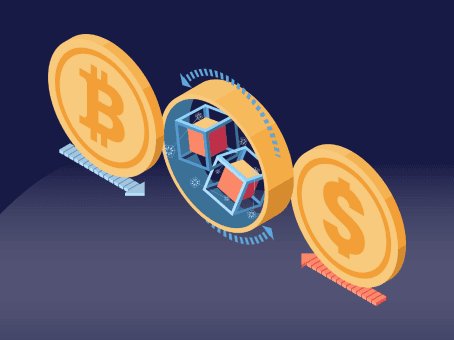
For years, Bitcoin and stablecoins have been treated like rivals. Some people swear Bitcoin is the only digital money that matters. Others claim stablecoins are best because they offer the ease and familiarity of dollars without the friction of traditional banking. In reality, they were just built for different purposes.
This piece breaks down how Bitcoin and stablecoins compete, where they complement each other, and why both matter in a maturing crypto economy.
Bitcoin vs Stablecoins: What’s the Difference?
The easiest way to understand the split is that Bitcoin was made to be neutral, global money. Stablecoins were made to be digital dollars.
Bitcoin is decentralized, censorship-resistant, and backed by math and computational energy. Its supply is fixed, which is why many people see it as a long-term store of value, even if the price swings.
Stablecoins are tied to fiat currencies, usually the U.S. dollar. Their purpose is stability. They’re widely used for payments, trading, and cross-border transfers because they move quickly without bank delays.
Digital Gold vs Digital Dollars
What Makes Bitcoin Different: Decentralization, Fixed Supply, and Security
Bitcoin works without a central issuer. No government or company controls its supply or can change its rules easily. That scarcity and independence are why it’s often called “digital gold.”
What Makes Stablecoins Different: Price Stability and Fiat Pegs (USD Stablecoins)
Stablecoins are designed to hold a steady value (typically around $1). They’re practical for everyday use, but they usually rely on an issuer and traditional financial infrastructure, like reserves and banking partners.
How Bitcoin and Stablecoins Compete
Bitcoin vs Stablecoins for Payments: Which Is Better for Everyday Spending?
Stablecoins are often easier for everyday payments because their value remains consistent. If you send $100, the recipient receives roughly $100.
Bitcoin can also be used for payments, especially on the Lightning Network, but some users prefer stablecoins to avoid volatility.
How the Lightning Network Changes Bitcoin Payments
Lightning makes Bitcoin payments faster and cheaper, which helps it compete in real-world payment use cases. It improves speed and fees, though it doesn’t eliminate price volatility.
Bitcoin vs Stablecoins for International Transfers: Fees, Speed, and Volatility
Stablecoins are popular for cross-border transfers because they’re fast and predictable in value. Bitcoin can also move globally, but short-term price changes can matter if someone needs an exact amount in dollars.
Bitcoin vs Stablecoins for Trading: Liquidity, Pairs, and “Cash” on Exchanges (USDT/USDC)
Stablecoins are commonly used as “cash” on exchanges. Bitcoin is often the asset people hold or trade, but stablecoins dominate as the base currency for many trading pairs (like USDT/USDC).
Where Bitcoin and Stablecoins Don’t Compete
Store of Value: Bitcoin vs Stablecoins for Long-Term Savings
Stablecoins are utility tools, not long-term investments. They track fiat value. Bitcoin is designed to be scarce, which is why many people use it as long-term savings.
Monetary Independence: Bitcoin’s Fixed Policy vs Fiat-Backed Stablecoins
Bitcoin’s supply schedule is predictable. Stablecoins depend on issuers and central-bank policy. If you want money that doesn’t rely on institutional promises, Bitcoin plays a different role.
Censorship Resistance: Can Stablecoins Be Frozen vs Bitcoin Self-Custody
Stablecoin issuers can freeze funds if required. Bitcoin doesn’t have an issuer that can do that. This difference matters for users who prioritize self-custody and censorship resistance.
Bitcoin and Stablecoins: Why Both Are Growing
Stablecoins are growing because they make “digital dollars” easy to move worldwide. Bitcoin keeps growing because it offers scarcity, independence, and a highly secure monetary network.
In practice, many users treat stablecoins as spending/transferring tools and Bitcoin as longer-term savings, two different roles in one ecosystem.
Understanding the difference helps you pick the right tool for the job. At HoneyBadger, our team is here to help you make the best decisions to reach your unique financial goals. Get in touch with us at support@badgercoin.com or 1-855-499-1149 to learn more.