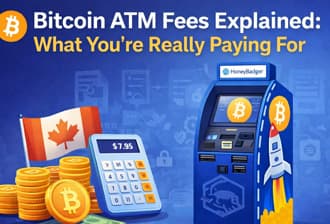
One of the first things new buyers notice is that a Bitcoin ATM fee looks higher than an online exchange's. That comparison misses what you're really buying: instant, in-person, cash-to-crypto settlement with no bank account required.
Where the fee actually goes
- Network fees — the cost of confirming your transaction on the blockchain, which the operator pays on your behalf.
- Liquidity — keeping crypto on hand so you walk away with coin the moment you pay, instead of waiting for a transfer to clear.
- Compliance — the licensing, monitoring, and reporting that keep a regulated machine legal and safe to use.
- Hardware and service — physical machines need maintenance, security, and cash handling around the clock.
Convenience has a real value
An online exchange is cheaper precisely because it offloads work onto you: link a bank account, wait for verification, wait for the transfer, then wait for the withdrawal. An ATM compresses all of that into a couple of minutes with cash in hand.
You are not paying a premium for Bitcoin — you are paying for speed, privacy, and certainty.
How to keep your costs down
Fewer, larger purchases generally cost less per dollar than many tiny ones, because the fixed costs are spread further. Check the rate displayed on screen before you confirm — at HoneyBadger it is shown up front, every time, with no surprises after you commit.